
Our Responsibilities
Tyne and Wear Fire and Rescue Service must take all reasonable measures to ensure that an adequate supply of water will be available for the Authority’s use in the event of fire, in line with the Fire Services Act 2004.
There are approximately 20,000 statutory fire hydrants across Tyne and Wear providing emergency access to mains water for firefighting.
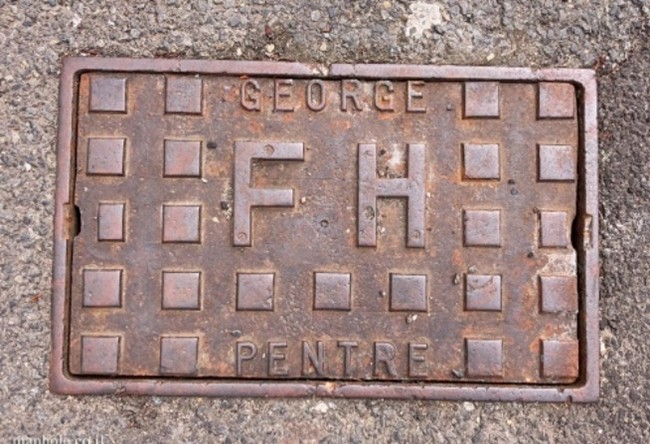
Statutory fire hydrants are installed on the Water Company network and are typically located in the public highway, with a fitted FH lid and marker plate. Tyne and Wear Fire and Rescue Service are responsible for inspecting and maintaining statutory fire hydrants.
Fire Hydrant Marker Plate
Fire hydrants are identified with yellow ‘H’ indicator plates, these contain important information for our crews. The plates are usually fitted to street furniture, an adjacent wall or concrete post.
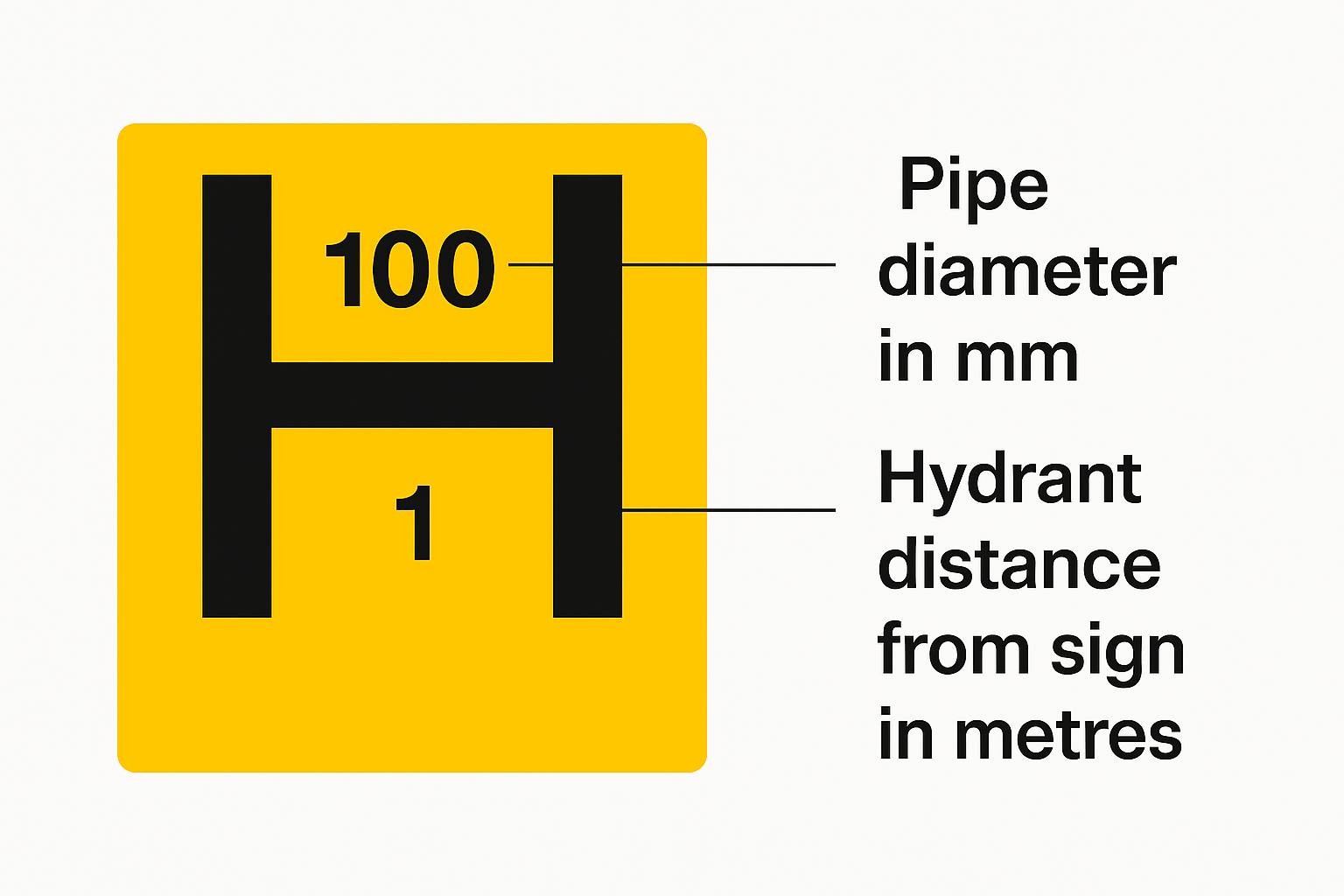
The number on the top of the plate is the size of the water pipe and the bottom number, is the approximate distance from the plate to the installation in the ground.
In certain circumstances, hydrant markers may need to be relocated, for example, when a property owner intends to widen a driveway. If this applies to you, please complete the form at the bottom of this page to contact us.
Inspecting Fire Hydrants
We have a small team of Service Hydrant Technicians who are responsible for inspecting statutory fire hydrants. The technicians will carry out minor repairs and maintenance on fire hydrants, with major repairs completed by the Water Company.
Reporting a Defect to a Statutory Fire Hydrant
Reporting a defect to a statutory fire hydrant
Please complete the form below to report a defective hydrant or indicator plate. Private fire hydrant defects should be reported directly to the owner and not Tyne and Wear Fire and Rescue Service.
Obstructing a Fire Hydrant
In the event of a fire, firefighters must be able to access water supplies without delay.
Vehicles parked over or too close to fire hydrants can significantly hinder emergency response and place lives and property at risk. Please ensure you do not obstruct fire hydrants when parking.
Under the Fire and Rescue Services Act 2004 it is an offence to damage or prevent access to a fire hydrant when it is required for firefighting.
Using a Fire Hydrant
It is an offence to use a fire hydrant to obtain water for purposes other than firefighting, and Tyne and Wear Fire and Rescue Service do not permit third parties to use a fire hydrant.
If a member of the public/or an organisation wishes to use a fire hydrant, they must contact the Water Company to hire their equipment, and the Water Company will advise on an appropriate washout to use.
Please see below the difference between a washout and a fire hydrant. Note Washouts do not have yellow indicator plates affixed to identify their presence.
Fire Hydrant/FH – Fire Service use Only
WATER/WO – Water Company Washout
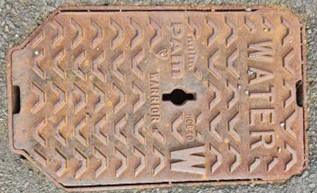
If you witness illegal hydrant use, please notify the local Water Company or submit the information to Tyne and Wear Fire and Rescue by completing the form here.
Please provide as much detail as possible, such as vehicle registration number, any company names displayed on vehicles, descriptions of the individuals involved, and the date, time, and location of the incident.
Private Fire Hydrants
Private fire hydrants are installed on private water mains and are not the responsibility of Tyne and Wear Fire and Rescue Service or the local Water Company, they are the responsibility of the owner on whose land they are installed.
They are generally installed on private land such as hospitals, military establishments, schools, industrial estates and may also be installed to provide cover for specific risk properties.
The installation, maintenance and testing of privately owned fire hydrants is regulated by British Standard 9990:2015. It is the responsibility of the owner or occupier of the site to test the hydrant(s) and maintain records, and it is their responsibility to ensure that any repairs are carried out at their expense.
We can provide a quotation to carry out minor works such as supply and fitting of indicator plates, false spindles or clearing hydrant pits. Please complete the form below with the requirements.
Note: Tyne and Wear Fire and Rescue Service cannot comment on whether or not a private fire hydrant can be abandoned. This is the responsibility of the owner. Sites that rely on private hydrants should be confident that, in the event of a fire, the private hydrants will provide an adequate and reliable water supply.
Fire Hydrant Locations
They are generally installed on private land such as hospitals, military establishments, schools, industrial estates and may also be installed to provide cover for specific risk properties.
The installation, maintenance and testing of privately owned fire hydrants is regulated by British Standard 9990:2015. It is the responsibility of the owner or occupier of the site to test the hydrant(s) and maintain records, and it is their responsibility to ensure that any repairs are carried out at their expense.
We can provide a quotation to carry out minor works such as supply and fitting of indicator plates, false spindles or clearing hydrant pits. Please complete the form below with the requirements.
We are unable to provide a marked plan of fire hydrant locations, as the mapping database we use is protected, the data and use of this information within it is subject to strict terms and conditions. Any requests for information regarding the location of fire hydrants, should be directed to the Water Company.
Those sites that rely on private hydrants should feel confident and satisfied, that should a fire breakout, the private mains/private fire hydrant supply will be sufficient.
For information on flow rates, please refer to the National Guidance Document on the Provision of Water for Firefighting which is available on Water UK website.
Flow Testing on Fire Hydrants
If you require a flow or pressure test, you will need to contact the Water Company directly to arrange/approve testing to prevent disruption to their network.