.

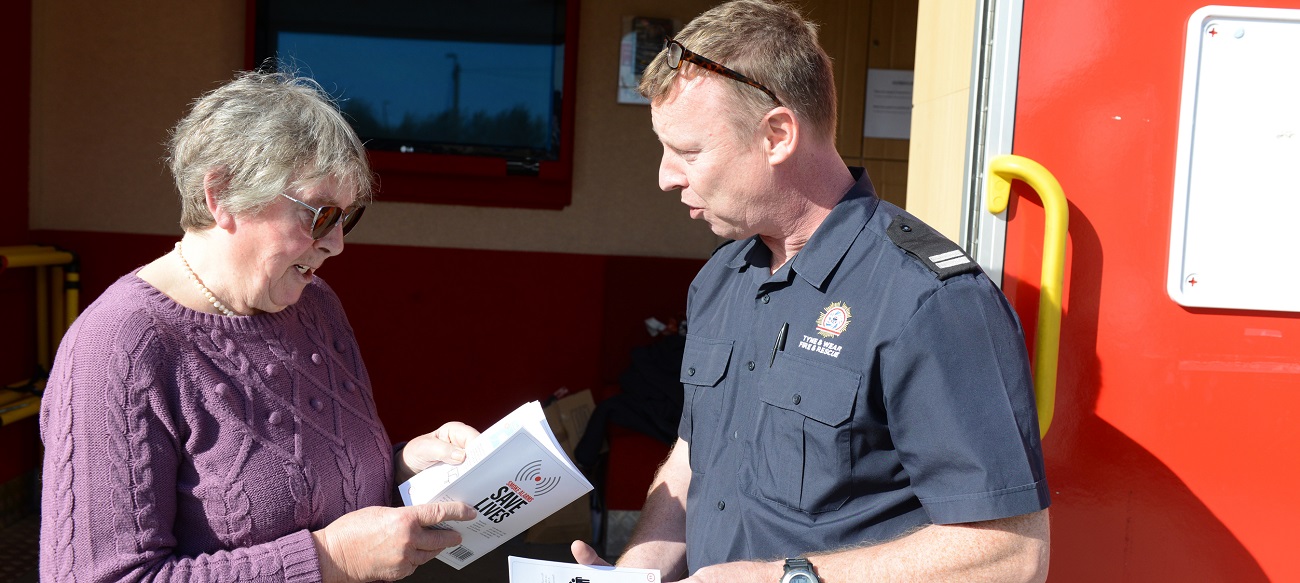
How can having a smoke alarm help you?

Approximately half of all accidental dwelling deaths in England and Wales every year occur amongst the over-60’s. Over the past five years, the average fatality rate in accidental dwelling fires has been higher amongst the over-60s compared to the average fatality rate for the population as a whole.

Over the 4 year period from 18/01/05 – 17/01/09 there have been 19 fatalities within Tyne and Wear Fire and Rescue Service area in accidental dwelling fires. Within this period:

• 63% (12) of these fatalities have been aged 60 or over
• 73% (14) of these fatalities have been aged 50 or over

Older people are classed as one of the vulnerable groups by the department of Communities and Local Government therefore Fire and Rescue Services are directed to target their resources towards reducing the risk of fire amongst this vulnerable group.

Statistically, older people are less likely to have working smoke detectors in their property. They are also more likely to suffer from age related impairments such as impaired mobility. 

Those living in bungalows or ground floor flats are also inclined to feel they have less fear in the event of a domestic fire in that they believe it will be relatively easy for them to get out of their home.

The main precaution taken against fire in the home is the installation of a working smoke alarm.  Most have battery operated smoke alarms.  Those who don’t have one just haven’t got round to it or they don’t see the need to have one for instance, they don’t smoke, have an open fire or a chip pan.

We know that smoke alarms are not always positioned correctly in the house, for example some are placed in the kitchen/above the cooker.  There are frequent complaints that the alarm is always going off at inconvenient times, which sometimes leads to respondents disabling their alarm.

Maintenance of smoke alarms can be haphazard. Rather that climb up to check the alarm regularly, most wait until the battery starts bleeping when it is running low or rely on their children, friends or neighbours to change it when they visit.

Common causes of domestic fires involving older people include –

  • Chip pans setting alight and/or not turning gas or electricity off properly

  • Old/faulty electrical equipment – older people holding onto older appliances such as kettles and electric blankets/extra or “cheaper” heating in the winter (electric fires/paraffin heaters), leaving televisions on standby

  • Falling asleep with a cigarette – old habits die hard

  • Overloading plugs – inc. Extension leads and multi-point adaptors. 

  • Many are unsure what is/is not safe and how it can be tested.

  • Use of candles – some use them for ambience and/or to overcome cooking smells.  Hindus use candles especially at Diwali – dangerous if tired or dozing or have been drinking or children or pets can knock them over.